- Type
- History and culture
- Area
- South Zone
- Free entry
- Yes
- Good for kids
- Yes
- Requires a hike or uphill walk
- No
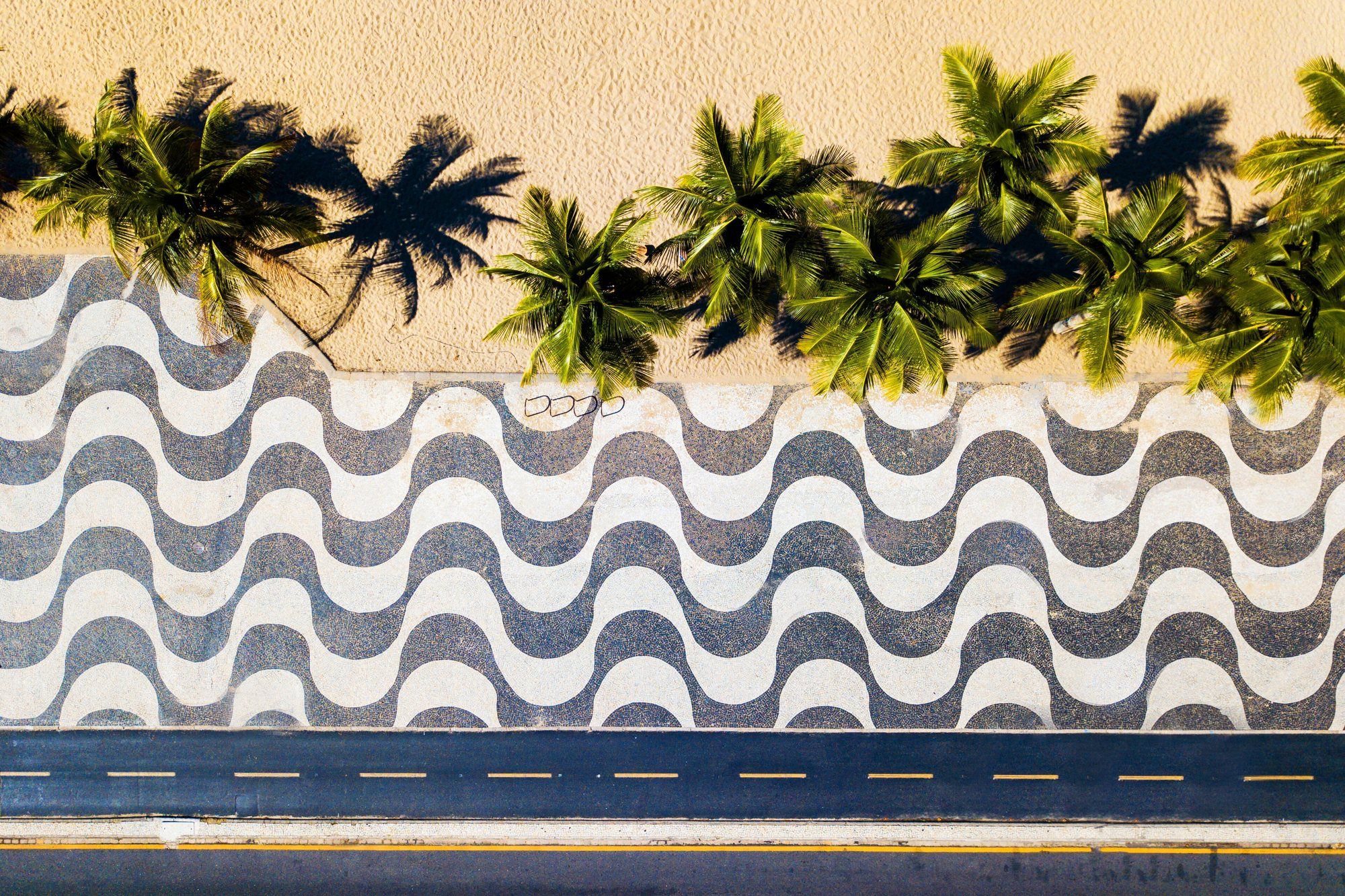
The Copacabana promenade (calçadão) is the Portuguese-stone pavement that runs along Avenida Atlântica from Leme to Posto 6, for about 4 kilometers, according to the English Wikipedia. Its black and white waves have become a symbol of Rio and appear on the scarf of Tião, this guide’s mascot. The ensemble was heritage-listed in 1991 by Inepac, the state heritage institute, according to Wikipedia.
The waves came before Burle Marx
You often read that Roberto Burle Marx designed the Copacabana waves. That is not quite right. Avenida Atlântica was built from 1905, under Mayor Pereira Passos, and opened in 1906. From then on, the promenade alongside it already used the wave pattern known as “mar largo” (wide sea), a tribute to the city’s Portuguese heritage, according to Wikipedia.
The design came from Lisbon. The wave pattern was created in the early 19th century for the Rossio, today’s Praça D. Pedro IV, where it represented the meeting of the Tagus River and the ocean. In Rio, the same waves came to evoke the sea at Copacabana. In Brazil, before Copacabana, Portuguese wave paving had already been used at Largo de São Sebastião in Manaus, opened in 1900.
Burle Marx’s 1970s design
In the early 1970s, Avenida Atlântica was widened. The landscape architect Roberto Burle Marx was invited to modernize the promenade. Two changes marked the project, according to Wikipedia:
- The waves turned: previously perpendicular to the beach, they now run parallel to it.
- New mosaics: the avenue’s central strip got abstract black, white and red mosaics designed by Burle Marx.
Other elements that now seem part of the scenery came later: the lifeguard posts in 1975, the coconut palms on the sand in 1988 and the cycle path in 1992, replacing the beachfront parking, according to Wikipedia.
Portuguese stone
The paving is made of small stones laid by hand, fitted together on a sand base. The black, white and red stones came from Portugal, according to Wikipedia. That is why, when the promenade is repaired, the work is still done by hand.
A walk
The walk from Leme to Posto 6 is completely flat and can be done in any stretch, at your own pace. Along the way are kiosks, exercise equipment, volleyball courts and the Copacabana Palace. At the end, carry on to the Fort or round to Arpoador for the sunset.
The promenade is also Avenida Atlântica’s stage on party days: New Year’s Eve in Copacabana, concerts and sporting events take place there, according to Wikipedia.
Take care
- Keep your phone away when you are not taking photos and carry only what you need.
- At night, stay on the lit, busy part of the promenade, not on the dark strip of sand.
- The cycle path is for bikes: look both ways before crossing.
Getting there
The Cardeal Arcoverde, Siqueira Campos and Cantagalo metro stations are a few blocks from the seafront, according to the MetrôRio network. See the lines in getting around Rio and the beach in Copacabana Beach.
Practical tips
- To photograph the waves without crowds, go just after sunrise.
- Shoot from the side, at a diagonal, so the curves show in full.
- Hold your phone firmly: the promenade is busy and theft happens.
Frequently asked questions
Did Roberto Burle Marx create the waves of the Copacabana promenade?
No. The wave pattern has run along Avenida Atlântica since the avenue opened in 1906, inspired by the paving of the Rossio in Lisbon. In the 1970s, Burle Marx modernized the layout, turning the waves parallel to the beach, and designed the mosaics of the central strip, according to Wikipedia.
What is the promenade made of?
Portuguese stone (pedra portuguesa): small stones laid by hand, in black, white and red, according to Wikipedia.
Is the promenade heritage-listed?
Yes. It was listed in 1991 by the State Institute of Cultural Heritage (Inepac), according to Wikipedia.
Where is the best place to photograph the promenade?
In Leme, with Pedra do Leme in the background, and at the Posto 6 end, near Copacabana Fort. Early morning brings soft light and fewer people.
Pair it with
-
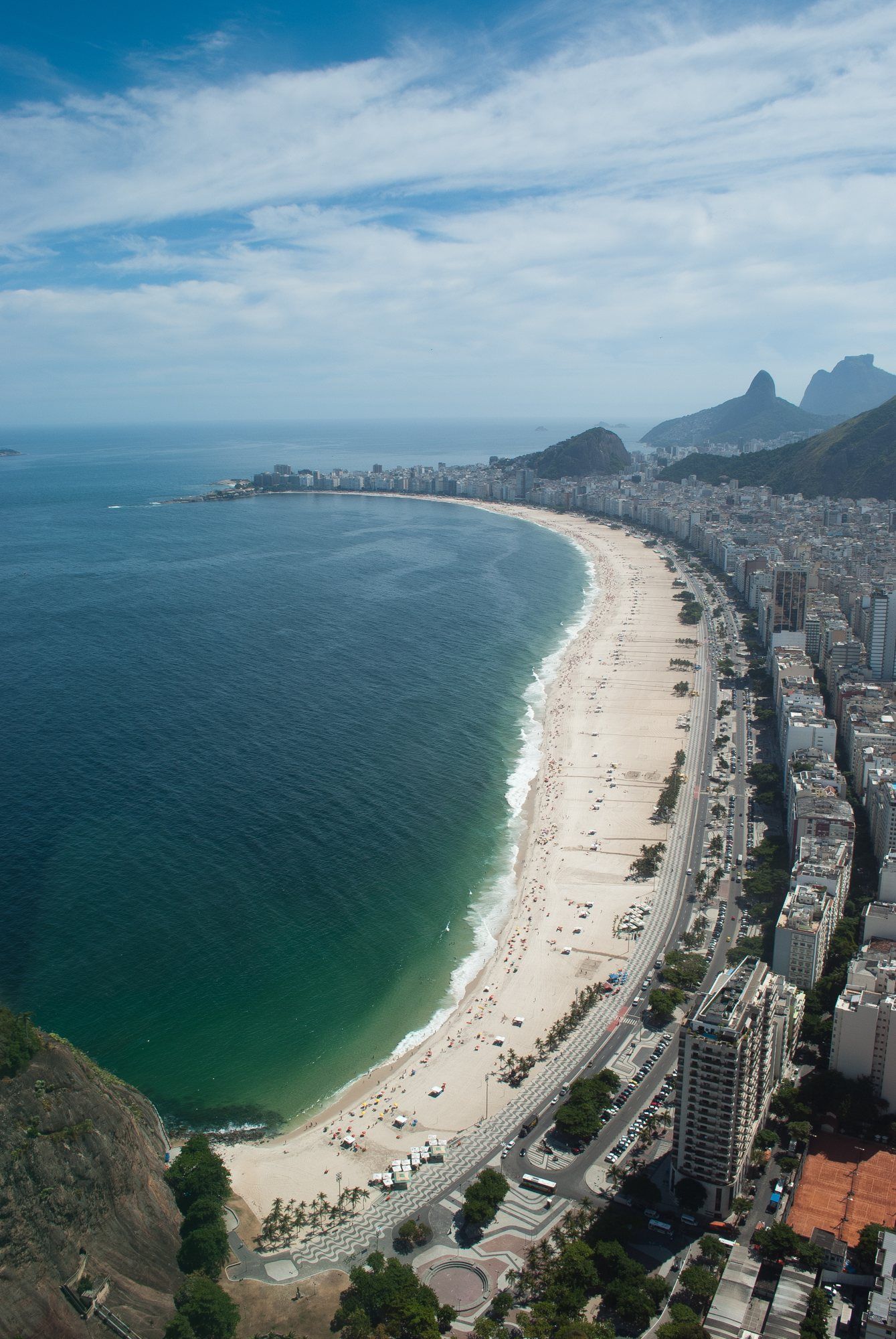 Free accessKids South Zone Copacabana Beach Rio’s most famous beach, with its Portuguese stone wave promenade, kiosks, beach sports and the world’s biggest New Year’s Eve party. See details
 -
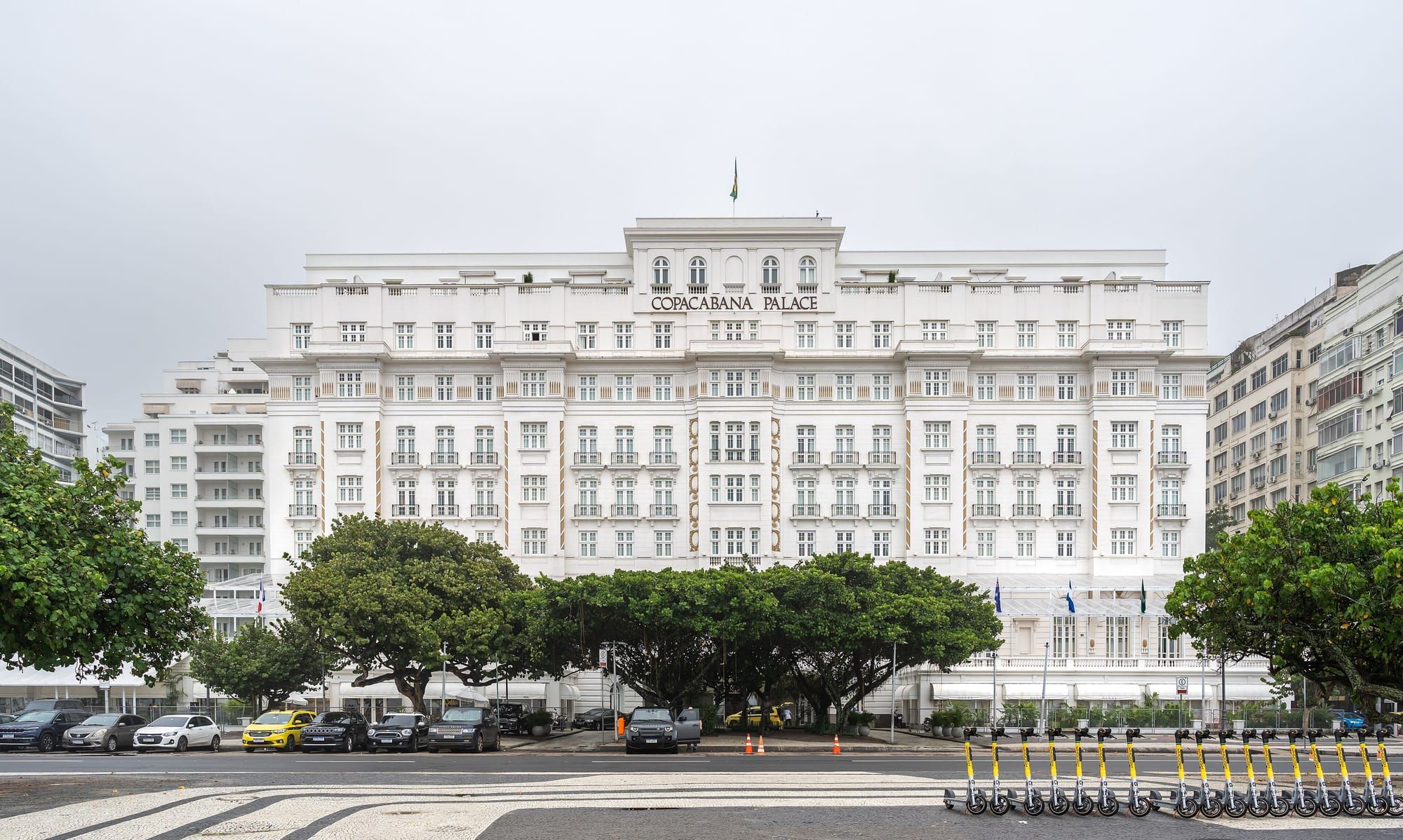 South Zone Copacabana Palace The first large building on the Copacabana seafront, opened in 1923 and heritage-listed at all three levels. A private hotel that became a postcard. See details
 -
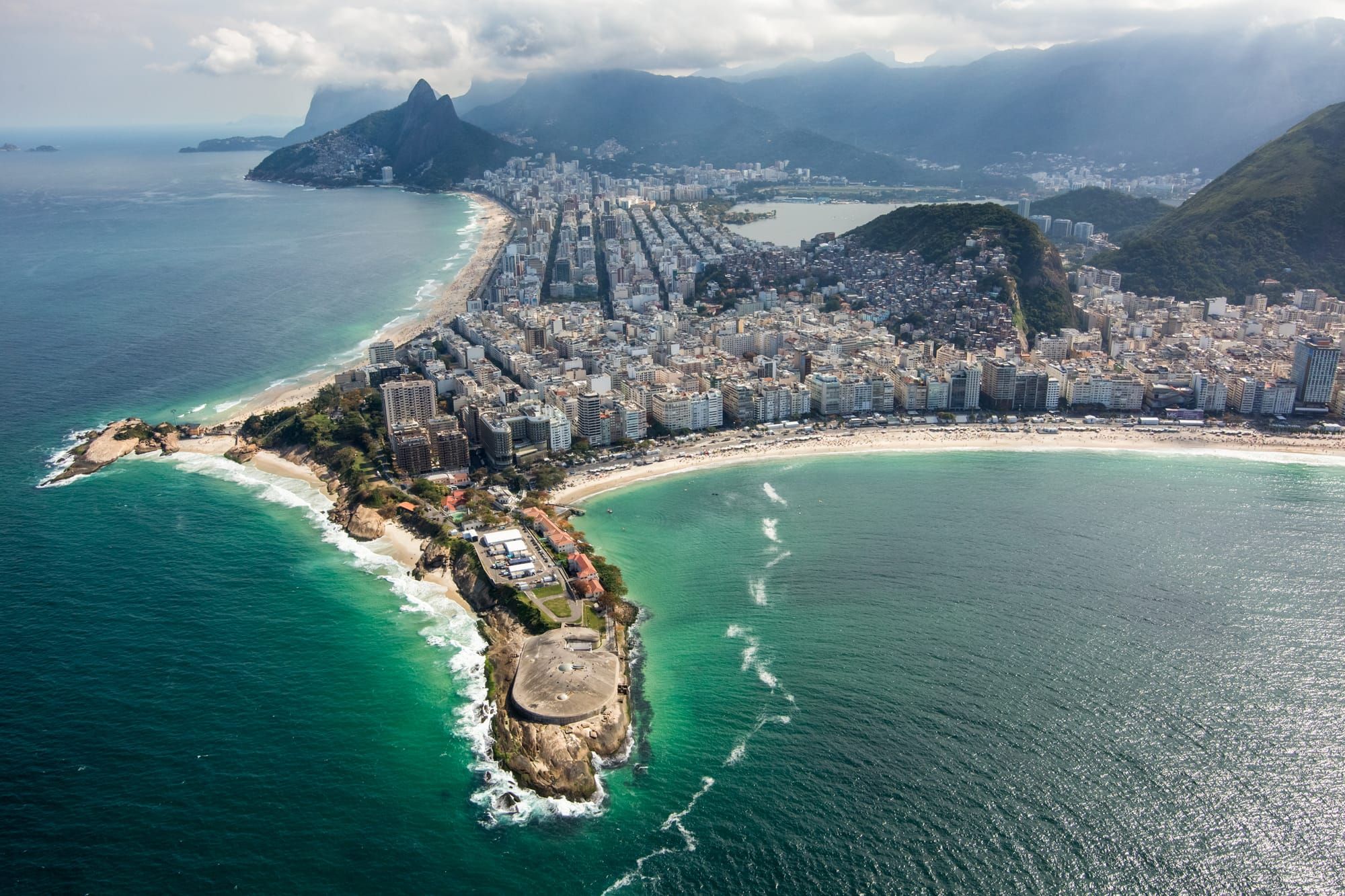 Kids South Zone Copacabana Fort The 1914 fortress at the tip of Copacabana, now the Army History Museum, with one of the finest views of the beach. See details