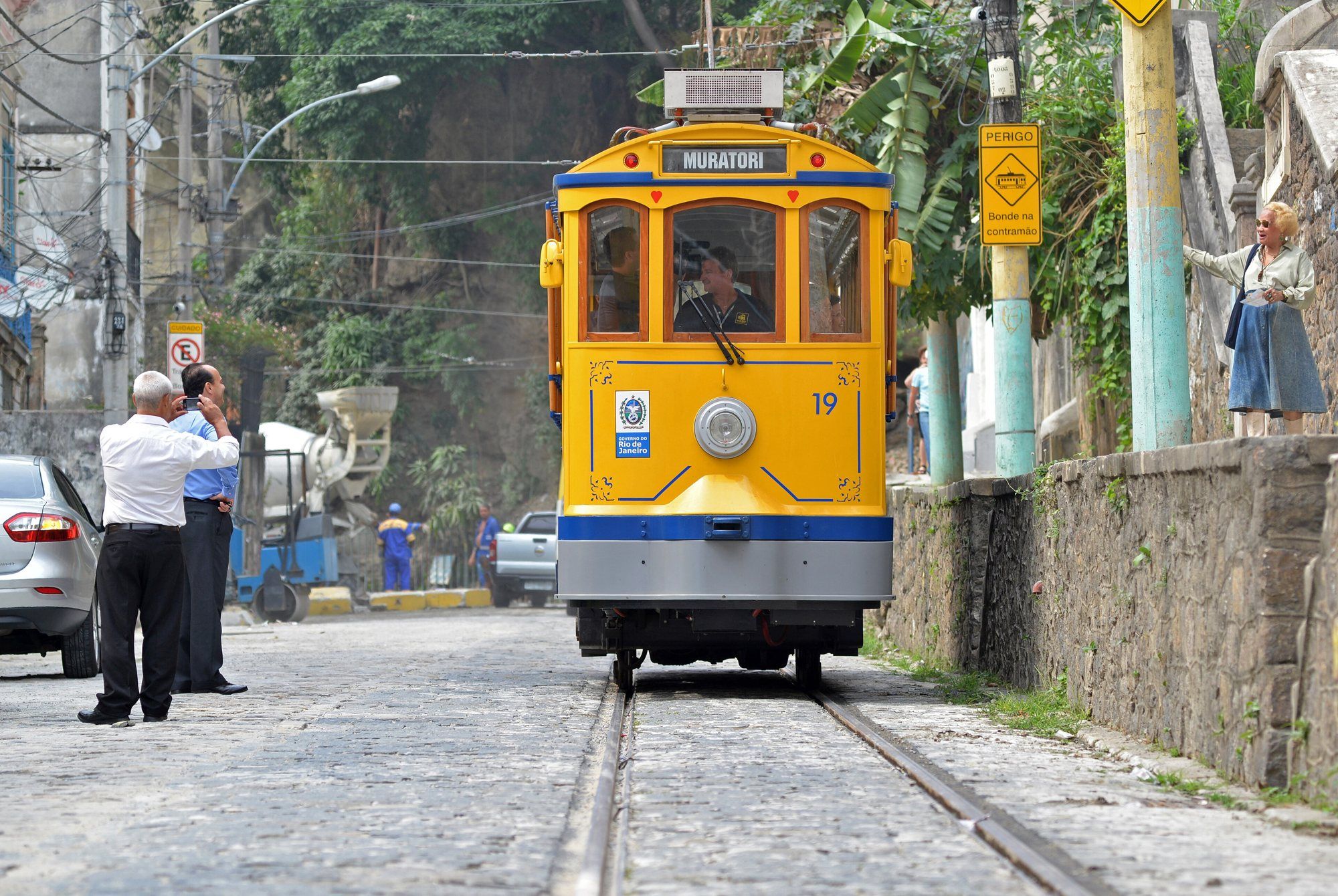
Getting around Rio de Janeiro
Metro for the beaches and downtown, VLT in the port area, BRT for the West Zone and taxis at night.
Updated on October 6, 2026 ✓ Information verified on October 6, 2026 adapted version of the Portuguese original
Metro
Rio’s metro opened in 1979 and now has about 58 km and 41 stations, according to Wikipedia. The operator MetrôRio runs three lines: 1, 2 and 4. For visitors, the metro links the South Zone beaches with downtown and reaches Barra da Tijuca on Line 4, at Jardim Oceânico. Fares and payment methods are on the “Meios e tarifas” page of the official website.
Useful stations: Cardeal Arcoverde, Siqueira Campos and Cantagalo (Copacabana), General Osório and Nossa Senhora da Paz (Ipanema), Antero de Quental (Leblon), Cinelândia and Carioca (downtown), Maracanã (stadium).
VLT Carioca
The light rail runs downtown and in the port area. According to the operator, there are four lines: Santos Dumont–Terminal Gentileza (Line 1), Praça XV–Praia Formosa (Line 2), Santos Dumont–Central (Line 3) and Praça XV–Terminal Gentileza (Line 4). It is handy for the Museum of Tomorrow, Praça Mauá and the Olympic Boulevard.
BRT
Bus rapid transit lines serve mainly the West and North Zones. The TransCarioca line links Barra da Tijuca with Galeão airport, according to Wikipedia.
Taxis and apps
Practical at night, with luggage and for places without metro access, such as the Dona Marta viewpoint, the Tijuca Forest and the West Zone beaches.
Bikes
There is a bike lane along the beachfront from Copacabana to Leblon and around the Lagoon, with bike-share stations in many places.
See also safety in Rio.
Frequently asked questions
Does the metro go to Copacabana and Ipanema?
Yes. There are stations in Copacabana, Ipanema and Leblon, as well as downtown and in Barra da Tijuca.
Does the VLT go to the airport?
Yes, to Santos Dumont. According to the operator, Lines 1 and 3 start at the airport.
Keep reading
Keep planning
-
 How to get to Rio de Janeiro Plane, bus or car: how to reach Rio and get from the airport to your hotel. Read guide
 -
 Where to stay in Rio de Janeiro Compare neighborhoods by beach, metro access, nightlife and distance to the main landmarks. Read guide
 -
 Safety in Rio de Janeiro Simple habits that prevent most problems, on the beach, on the street, on transport and on hiking trails. Read guide