- Type
- History and culture
- Area
- Downtown and Lapa
- Requires a hike or uphill walk
- No
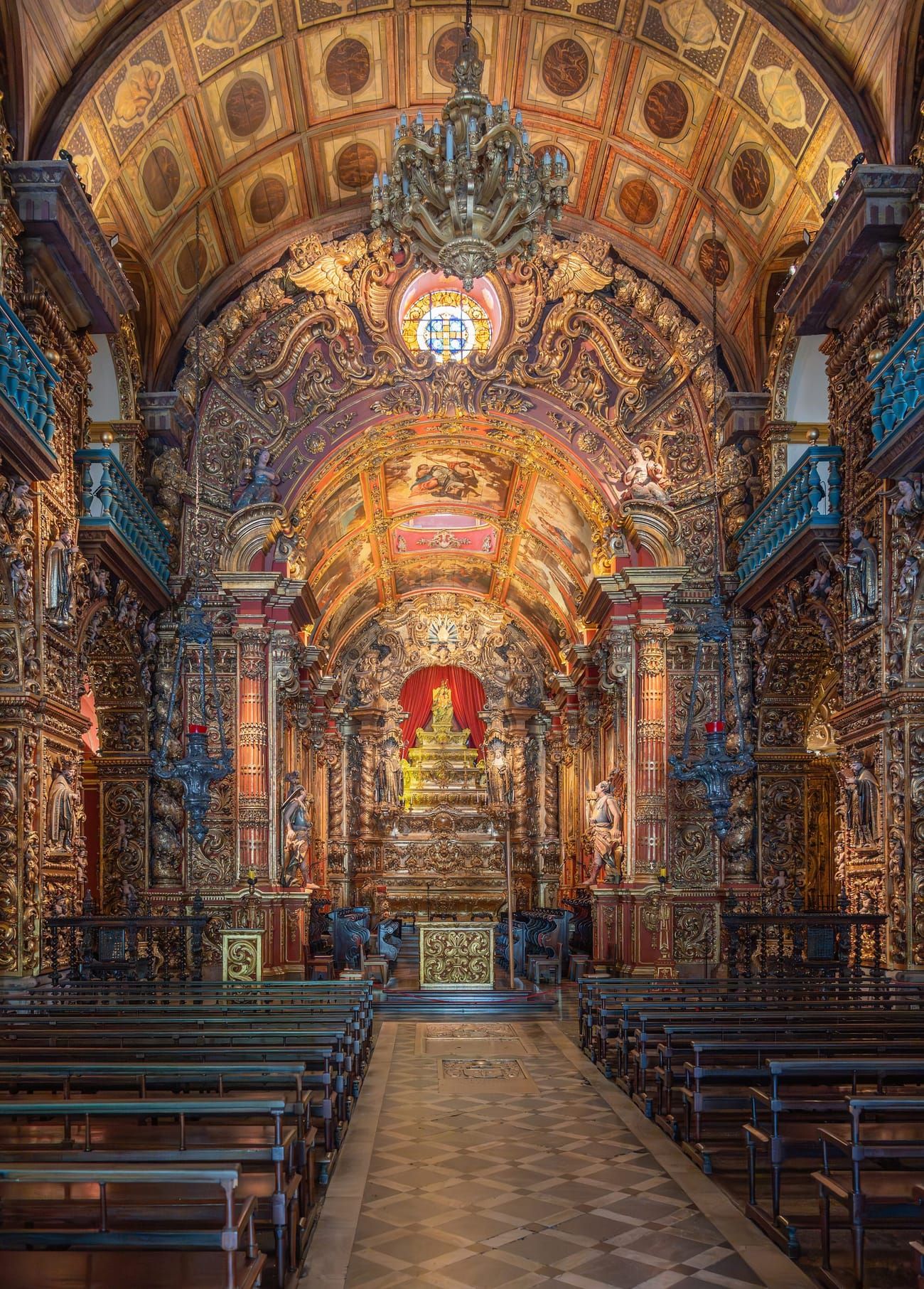
São Bento Monastery (Mosteiro de São Bento) stands on top of Morro de São Bento, in downtown Rio, near Praça Mauá. It is one of the most important monuments of colonial art in Brazil and still functions as a monastery of the Order of Saint Benedict, according to Wikipedia. For visitors, the highlight is the church, its interior entirely lined with gilded woodcarving.
Four centuries of history
The story begins in 1586, when the land including the hill was donated to Benedictine monks. The building’s plans were drawn up in 1617 by Portuguese military engineer Francisco Frias de Mesquita. Work on the church began in 1633 and was completed around 1671. The manual labor of construction was done by enslaved people, and the stone came from Morro da Viúva, in today’s Flamengo, according to Wikipedia.
The gilded church
Outside, the facade is sober and simple. Inside comes the surprise: the nave is lined with talha, carved and gilded wood, in styles ranging from late-17th-century Baroque to the Rococo of the second half of the 18th century. The church’s first sculptor was the Portuguese monk Frei Domingos da Conceição, and from 1714 other woodcarvers continued the work, according to Wikipedia.
According to the same source, the monastery offers guided visits to the church, explaining the works, the images and the styles.
Mass with Gregorian chant
The 10 a.m. Sunday Mass is celebrated with organ and Gregorian chant and draws many visitors, according to Wikipedia. On some liturgical dates, such as Palm Sunday and Corpus Christi, the monks hold a procession through the cloister.
The school
Next door is the Colégio de São Bento, founded in 1858, whose students have included, according to Wikipedia, figures such as Pixinguinha, Noel Rosa and Villa-Lobos.
Getting there and what to combine
The monastery is downtown, a few steps from Praça Mauá. Combine your visit with the Rio Art Museum, the Museum of Tomorrow and the Olympic Boulevard, from where you can see the monastery on top of its hill. The VLT Carioca light rail serves the area: see getting around Rio.
For a full day downtown, follow the historic downtown on foot route.
Practical tips
- Dress appropriately for a working church.
- During Mass, do not walk around taking photos.
- Confirm visiting and Mass times on the monastery's official channels.
Frequently asked questions
Is São Bento Monastery still active?
Yes. It is an active Benedictine monastery, with a church, the Colégio de São Bento school, founded in 1858, and a college of Philosophy and Theology, according to Wikipedia.
Is there a Mass with Gregorian chant at São Bento Monastery?
According to Wikipedia, the 10 a.m. Sunday Mass is celebrated with organ and Gregorian chant and draws many visitors. Confirm the time on the monastery's official channels.
Why is the church so golden?
The interior is entirely lined with talha, carved and gilded wood, in styles ranging from late-17th-century Baroque to the Rococo of the second half of the 18th century, according to Wikipedia.
Pair it with
-
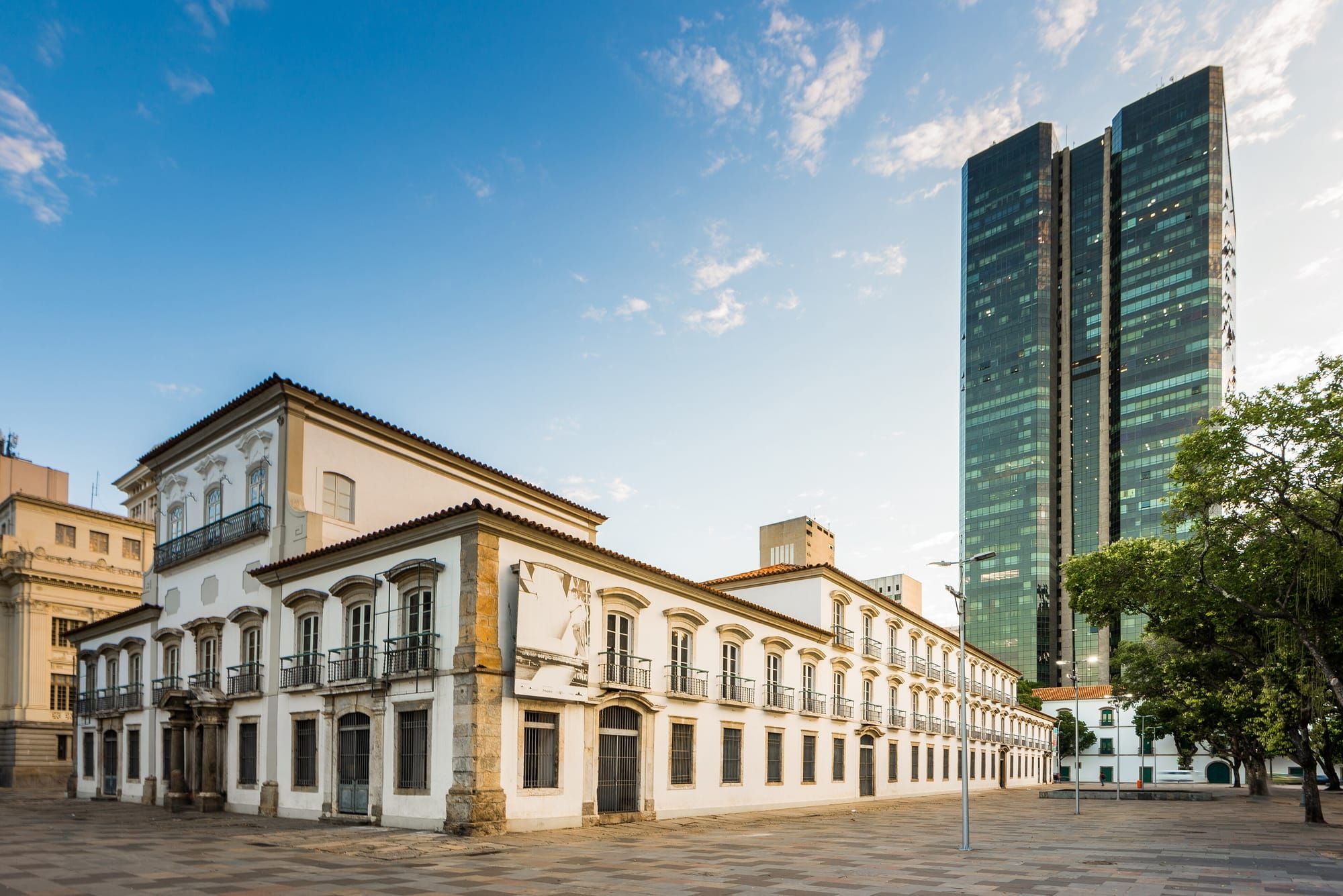 Downtown and Lapa Paço Imperial The colonial mansion on Praça XV that was the seat of power in Brazil for over a century. Today it is a cultural center. See details
 - Downtown and Lapa Banco do Brasil Cultural Center (CCBB Rio) A 1906 building with a rotunda lit by a glass dome, which became one of the most visited cultural centers in the world. See details
- Downtown and Lapa Rio Art Museum (MAR) An eclectic mansion and an old bus terminal joined by a wave-shaped roof, on Praça Mauá. See details